How to Prepare for the NID Studio Test 2026
The NID Studio Test is often described by aspirants as the most unpredictable yet most important stage of the National Institute of Design admission process. Unlike written exams that test aptitude and knowledge, the NID Studio Test evaluates something deeper how you think, observe, visualize, experiment, and solve problems as a designer.
For many students, this round becomes the deciding factor between selection and rejection. The good news? The Studio Test is not about being the best artist in the room. It is about approach, originality, clarity of thought, and adaptability all of which can be trained with the right preparation.
At MAD School, we have trained thousands of NID aspirants over the years through our NID Studio Test Coaching classes in Hyderabad, Chennai and Kerala. This in-depth guide is designed to help you clearly understand who the NID Studio Test is for, what it evaluates, and how you should prepare step by step.
What Is the NID Studio Test?
The NID Studio Test is a hands-on, practical examination conducted after the NID prelims stage for the students who qualify the NID DAT written examination. It is designed to assess your design aptitude in real-time situations.
Depending on the programme (B.Des or M.Des), the test may include one or more of the following:
- Sketching and visualisation exercises
- Doodling and idea exploration tasks
- Material handling and manipulation
- 3D model making
- Storytelling through visuals
- Problem-solving and design thinking exercises
- Spatial reasoning tasks
The Studio Test replicates the actual studio environment at NID, where students are expected to think, experiment, and create under time constraints.
Sketching and visualisation exercises
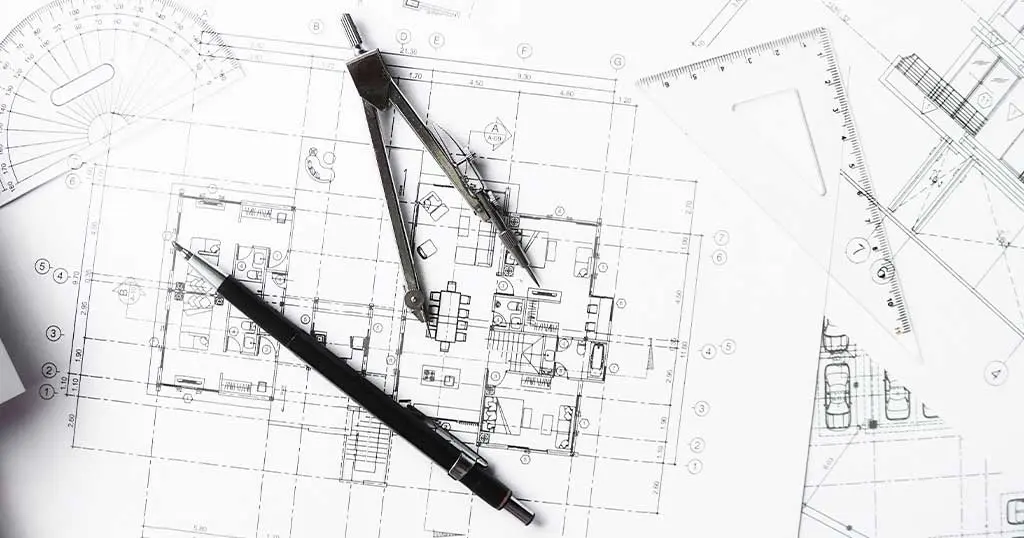
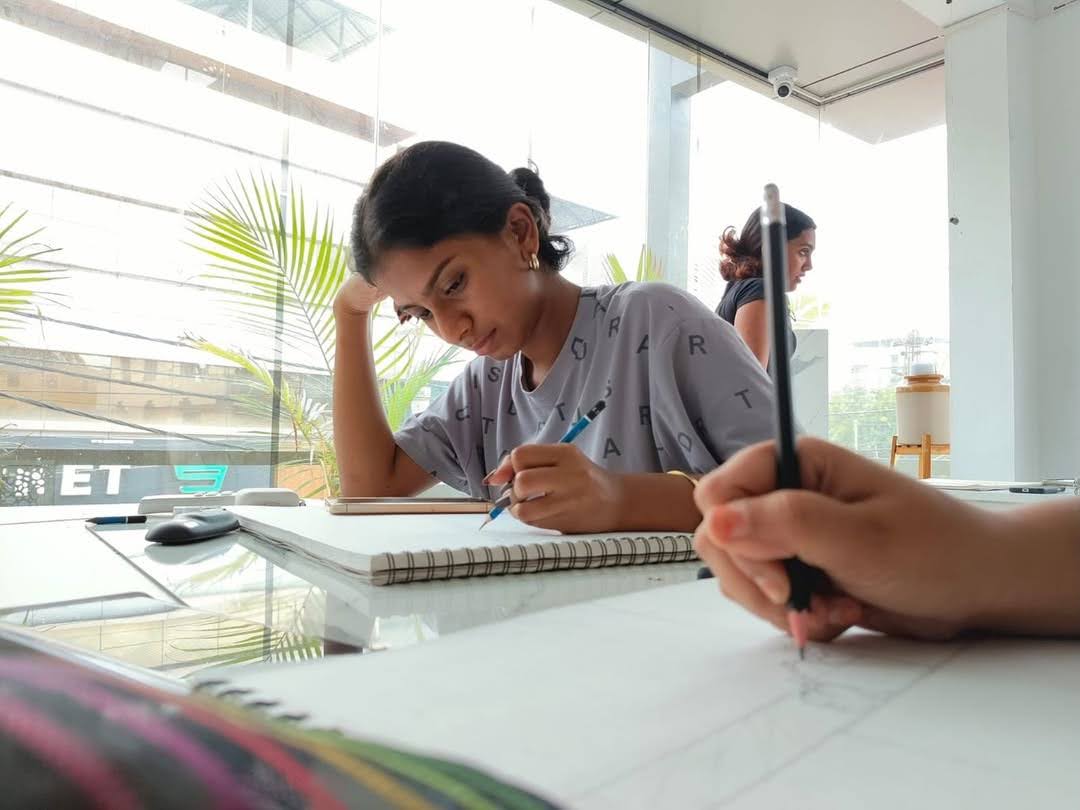
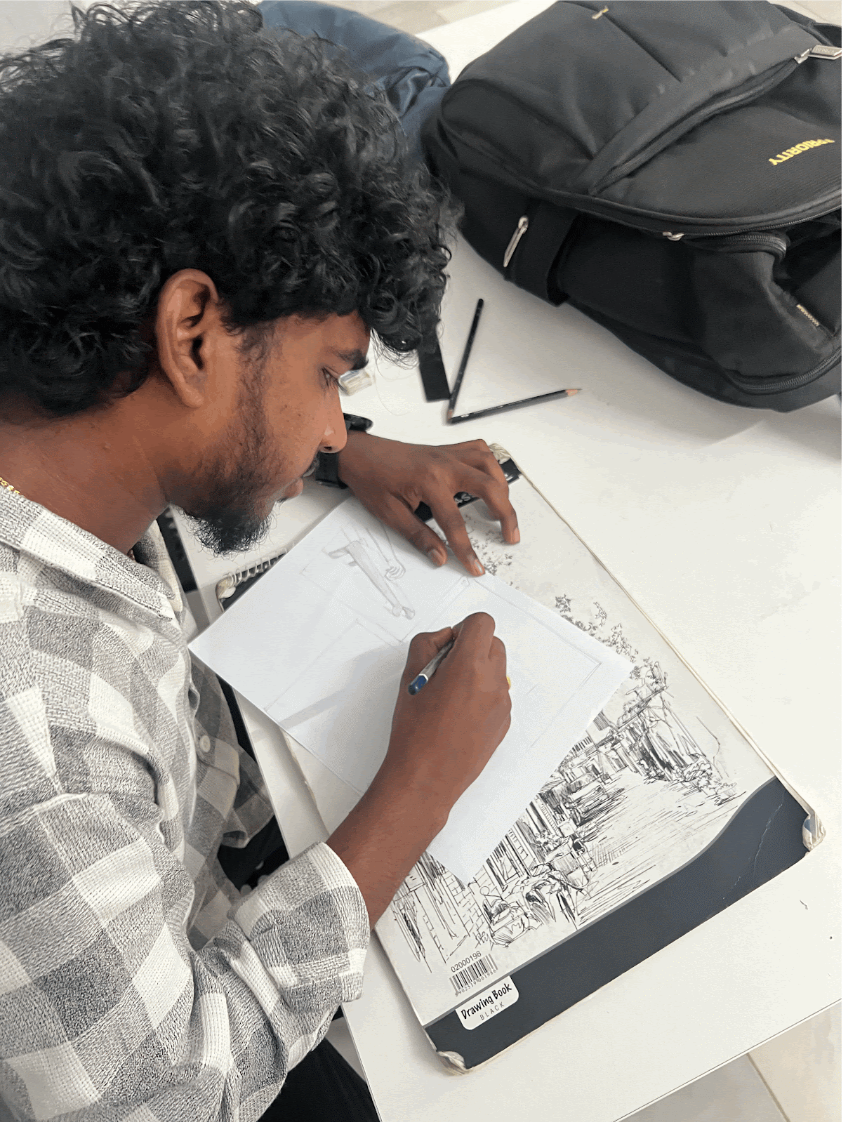
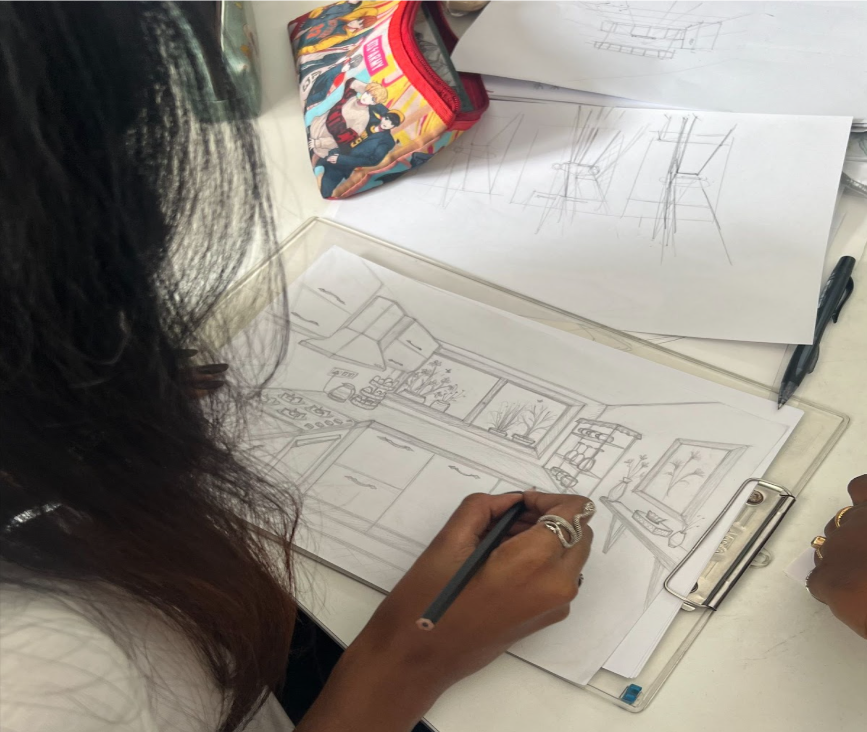
Sketching and visualization form the backbone of the NID Studio Test. These exercises are not meant to judge how beautifully you draw but how effectively you communicate ideas visually under time pressure. NID examiners look beyond artistic style and focus on clarity, intent, and thinking.
In the NID Studio Test, sketching is often used as a thinking tool, not a final artwork.
What Types of Sketching Questions Can Appear In NID Studio Test?
You may be asked to:
- Visualise an idea or concept based on a situation
- Sketch an object from memory or imagination
- Show how a product works or is used
- Depict human interaction with an object or space
- Convert a written problem into visual form
These tasks test how quickly you can translate thoughts into visuals.
Key Aspects NID Evaluates in Sketching
NID examiners typically assess:
- Clarity of idea – How easy is the sketch to understand?
- Proportion and scale – Do objects relate realistically to each other?
- Perspective awareness – Basic understanding of depth and space
- Confidence of lines – Clean, purposeful strokes instead of hesitant lines
- Relevance to the problem – Does the sketch actually answer the question?
Neat, confident sketches score far better than detailed but confusing drawings.
Sketching and visualisation Sample Question
A street vendor sells snacks from a small movable cart in a crowded marketplace. Sketch how the vendor prepares, serves, and packs food during peak hours. Show interaction with customers.
Doodling and Idea Exploration Tasks
Doodling allows you to explore ideas freely, generate variations, and visually explain your thought process. NID examiners value doodling because it reveals how you arrived at a solution not just the final answer.
In many Studio Test questions, marks are awarded for ideation quality and evolution, not just the final output.
What Kind of Doodling Tasks Appear in the NID Studio Test?
You may be asked to:
- Generate multiple concepts for a problem
- Explore form variations of a product
- Show idea evolution from rough to refined
- Visualise abstract concepts using shapes
- Improve or redesign an existing object
Doodling & Idea Exploration – Sample Question
Generate multiple ideas for a seating solution for people waiting at a busy railway station. Show at least 5 different concepts using quick doodles.
Material Handling and Manipulation
Material handling is one of the most distinctive and decisive components of the NID Studio Test. It evaluates your hands-on ability, material sensitivity, construction logic, and creativity under constraints.
This section often differentiates average candidates from strong design thinkers.
What Is Material Handling in the NID Studio Test?
Material handling tasks require you to:
- Understand material properties
- Experiment with forms
- Build structures or models
- Solve a problem using given materials only
The challenge lies in limited time and limited resources.
What NID Evaluates in Material Handling
Examiners assess:
- Understanding of material properties (flexibility, strength, texture)
- Structural stability
- Innovation in usage
- Craftsmanship and neatness
- Functional logic
A simple but well-thought-out model often scores high
Material Handling & Manipulation – Sample Question
Using paper, cardboard, and tape, create a structure that can hold a mobile phone at an angle suitable for watching videos.
3D Model Making
The NID Studio Test is not a drawing test it is a designer’s thinking test. Among all its components, 3D Model Making, Storytelling Through Visuals, Problem-Solving & Design Thinking, and Spatial Reasoning play a decisive role in identifying candidates who truly belong in a design studio environment.
Design is not limited to visuals it is about making ideas real. Through model making, NID evaluates:
- Ability to convert ideas into physical form
- Understanding of scale, proportion, and ergonomics
- Material sensitivity and efficiency
- Structural stability and logic
- Planning vs impulsive execution
A candidate who thinks in 3D naturally adapts better to studio-based learning at NID.
Types of 3D Model Making Tasks Asked in NID
You may be asked to:
- Build a functional product prototype
- Create a form representing an abstract concept
- Design a structure using limited materials
- Improve or redesign an existing object
- Construct a model for a specific user group
Some tasks emphasize function, others emphasize conceptual thinking often, both.
3D Model Making – Sample Question
Design and create a simple 3D model of a portable storage solution for students living in hostels using the materials provided.
Related: Improve your visualization skills for NID Studio Test 2026
Storytelling Through Visuals
Storytelling is the ability to communicate ideas visually without explanation. At NID, storytelling is not illustration it is visual communication design.
Designers constantly explain processes, experiences, and interactions visually. The Studio Test mirrors this reality.
Types of Visual Storytelling Questions
You may be asked to:
- Show a user journey
- Explain how a product works
- Depict a situation or experience
- Show cause-and-effect scenarios
- Visualise before-and-after transformations
These questions demand structure and empathy, not artistic detailing.
Storytelling Through Visuals – Sample Question
Illustrate a short visual story showing how an elderly person uses a redesigned kitchen tool that makes cooking easier.
Problem-Solving and Design Thinking Exercises
Problem-solving is the core philosophy behind the NID Studio Test. These exercises reveal whether you can think like a designer rather than just create visually pleasing outputs.
What NID Wants to See in Design Thinking
NID evaluates your ability to:
- Understand real problems
- Empathise with users
- Balance creativity with practicality
- Work within constraints
- Justify your design decisions
Design thinking is about why you chose a solution, not just what you designed.
Types of Design Thinking Questions
You may be asked to:
- Improve an everyday product
- Solve a problem for a specific user group
- Redesign an experience
- Create a solution using limited resources
These problems are intentionally open-ended.
Problem-Solving & Design Thinking – Sample Question
Children often struggle to carry heavy school bags. Propose a design solution to reduce physical strain while keeping safety and practicality in mind.
Spatial Reasoning Tasks
Spatial reasoning is the invisible skill behind good designers. It is your ability to mentally visualise, rotate, arrange, and manipulate forms in space.
Why Spatial Reasoning Is Important for Designers
Designers constantly imagine objects before they exist. NID tests whether you can:
- Visualise 3D forms mentally
- Understand depth and volume
- Predict how forms behave in space
Strong spatial thinkers adapt quickly to studio learning.
Types of Spatial Reasoning Tasks in NID
You may be asked to:
- Visualise objects from different viewpoints
- Predict folded or unfolded forms
- Arrange shapes logically
- Identify spatial relationships
These tasks test thinking speed and accuracy, not drawing skill.
Spatial Reasoning – Sample Question
A cube is formed by folding a flat net. Sketch how the cube will appear when viewed from the top and one side after folding.
Key Preparation Tips for NID Studio Test Questions 2026
Preparing for NID Studio Test Questions 2026 requires a clear understanding of the exam structure, consistent practice, and the ability to think creatively under time pressure. Unlike written exams, Studio Test questions are practical, open-ended, and designed to evaluate how you observe, visualise, and solve problems as a designer.
Understand the NID Studio Test Syllabus & Exam Pattern
The first step in NID Studio Test preparation is understanding the syllabus and exam pattern.
The Studio Test mainly focuses on two aspects such as Observation skills and Conceptualisation and creative thinking.
Prepare Topic-Wise for Studio Test Questions
NID DAT Mains (Studio Test) includes a variety of tasks. Preparing topic-wise helps you build confidence across all areas.
Common Studio Test question areas include:
- Story illustration and visual narration
- Doodling and ideation exercises
- Clay modelling and wire moulding
- 3D model making
- Material handling and construction tasks
- Psychometric or situational tasks
- Audio-visual based questions
- Thematic and conceptual appreciation
Practising each task separately helps you perform better when they appear together in the exam.
Build a Strong and Relevant Portfolio
For NID 2026 Studio Test preparation, your portfolio should reflect:
- Your creative thinking
- Experimentation with materials
- Sketching and visual storytelling ability
- Design process, not just final outputs
A well-curated portfolio strengthens your overall Studio Test and interview performance.
Create a Smart NID Study Plan
A structured study plan helps you avoid last-minute panic.
- Allocate time for each topic based on difficulty
- Include sketching, model making, and ideation daily
- Keep mock Studio Tests every week
- Revise based on feedback and mistakes
Always plan your preparation keeping the NID Studio Test pattern in mind.
Identify Your Strengths and Weaknesses
Evaluate your current skill set honestly:
- Are you strong in sketching but weak in model making?
- Are ideas good but time management poor?
Once identified, work specifically on weak areas to balance your overall performance.
Practice Model Making with Different Materials
Material handling is a crucial part of NID Studio Test questions.
Practice using:
- Thermocol
- Rubber sheets
- Wire
- Cloth and paper
- Clay and dough
- Wool, threads, pins
- Plastic sheets and foils
- Plaster of Paris and hardboard
The goal is to understand material properties, not to create decorative models.
Practice with Time Limits
Always give yourself a time limit while practising:
- Sketching tasks
- Ideation exercises
- Model-making assignments
This helps build speed, decision-making, and confidence during the actual exam.
Focus on Neatness and Presentation
Neat sketches, stable models, and clean layouts leave a strong impression.
Presentation reflects clarity of thinking and professionalism both are valued by NID examiners.
Prepare for Audio-Visual Based Questions
The NID Studio Test may include audio or visual rounds. You must Observe visuals carefully, Listen to audio clips attentively and carry a paper and pencil with you to note small details.
Questions may be asked from any part of the presentation, so focus is key.
10. Practice with Previous Year NID Studio Test Questions
While questions are not repeated, patterns remain consistent. Practising previous year questions helps understand task formats. Sample papers improve problem-solving speed and reviewing past questions builds confidence. Effective NID Studio Test preparation always includes exposure to past-style questions.
NID Studio Test Previous Years’ Question Examples
Practising realistic questions gives you a strong edge in the NID Studio Test 2026
Model Making Questions
Q1. You are given a wet sponge. Create a half-cut apple using it.
Q2.
- Make a chair using straws
- Design a pen holder using paper
- Build a toy using clay
Q3. Using the materials below, make an object that can move, make sound, or do both.
Materials provided:
- Potatoes (2)
- Ice cream sticks (3)
- Straws (3)
- Wires
- Rubber bands
- A4 size paper
(Explain your model and its function.)
Q4. Create an object using:
- Clay
- Hacksaw blade
- Water
- Sponge
The object should be suitable for a given setting.
Storyboarding – Sample Question
Q5. Draw 4–6 frames showing:
- A day in the life of a dog OR
- The journey of a seed
Audio-Visual Round – Sample Question
Q6. Watch a short audio-visual clip and answer creative and observation-based questions.
Observation Sketching – Sample Question
Q7. Sketch a person sitting and interacting with an object.
Final Tip for NID Studio Test 2026 Aspirants
Consistent practice, creativity, and smart preparation are key to cracking NID Studio Test Questions 2026. Think beyond obvious solutions, work neatly, manage your time well, and trust your preparation.
Constantly work on your creativity and challenge yourself to think out of the box that’s exactly what NID looks for.
Prepare Smart for the NID Studio Test 2026
The NID Studio Test 2026 is designed to identify students who think like designers, not those who memorise answers. Sketches, models, and visuals are simply tools; what truly matters is your ability to observe, analyse, visualise, and respond creatively to a problem.
Consistent practice across sketching, doodling, material handling, 3D thinking, storytelling, and problem-solving is the only reliable way to build confidence for this stage.
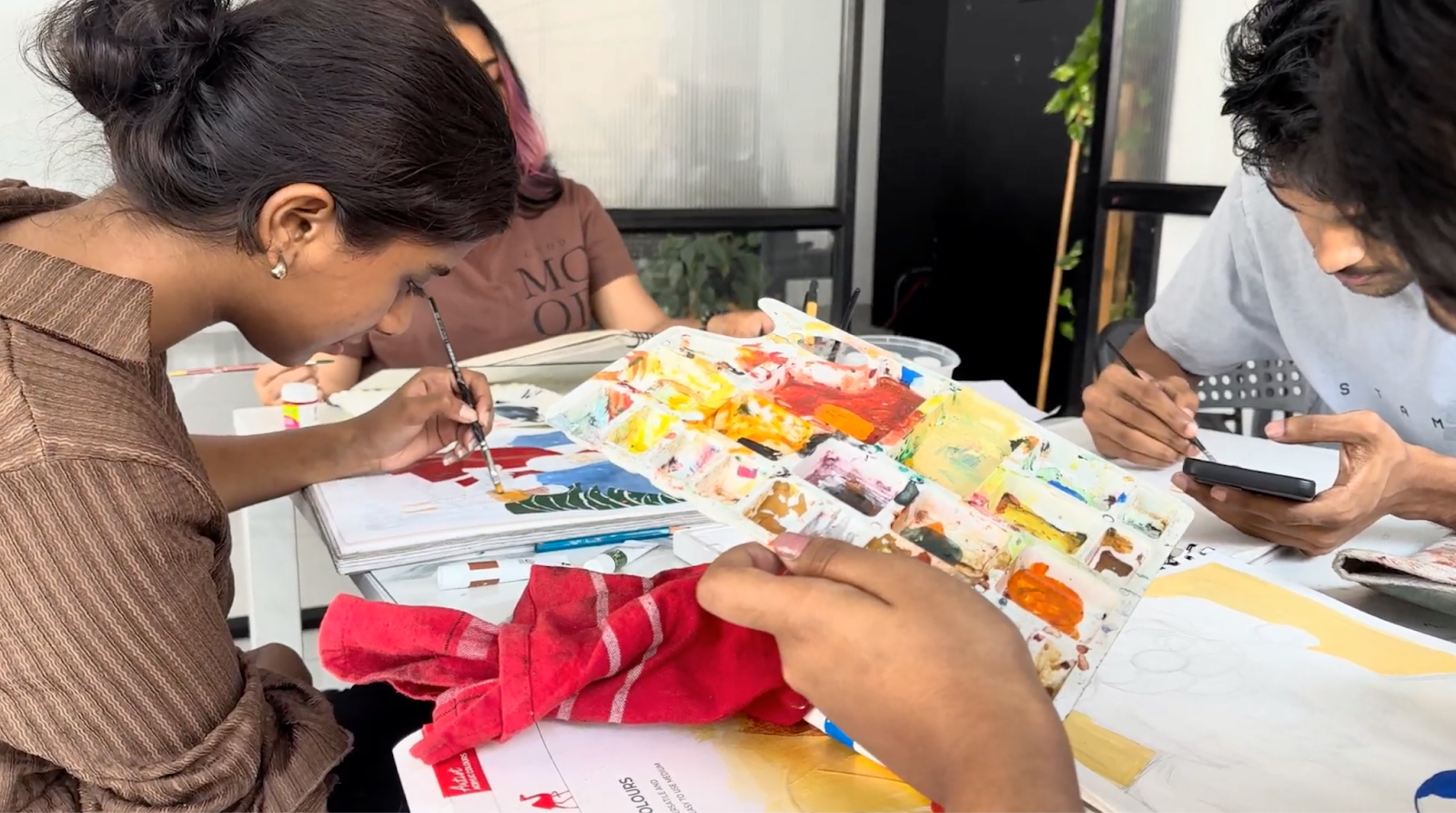
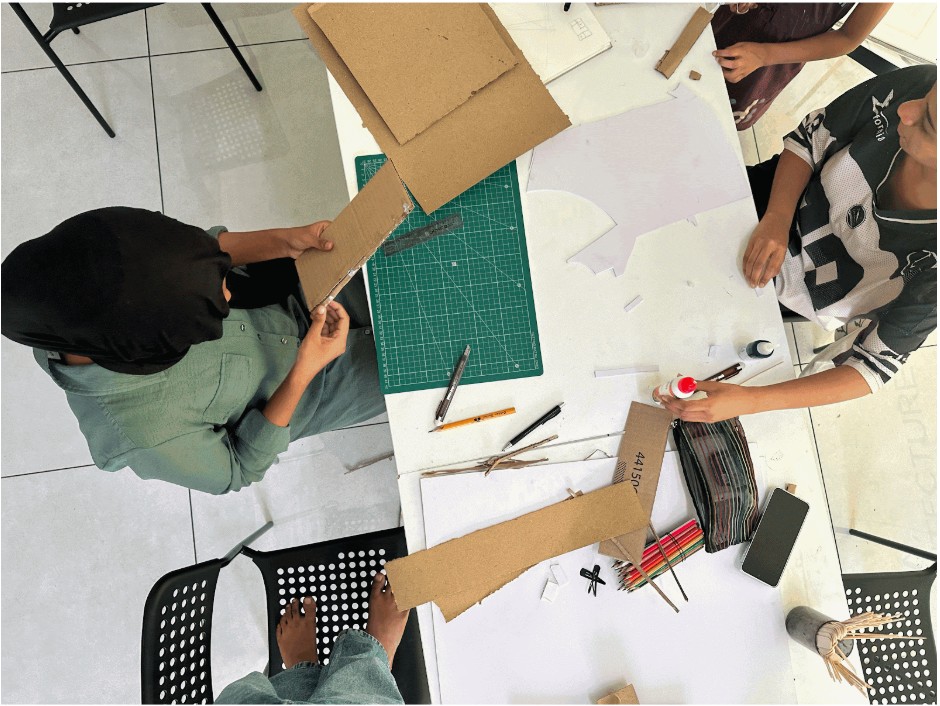
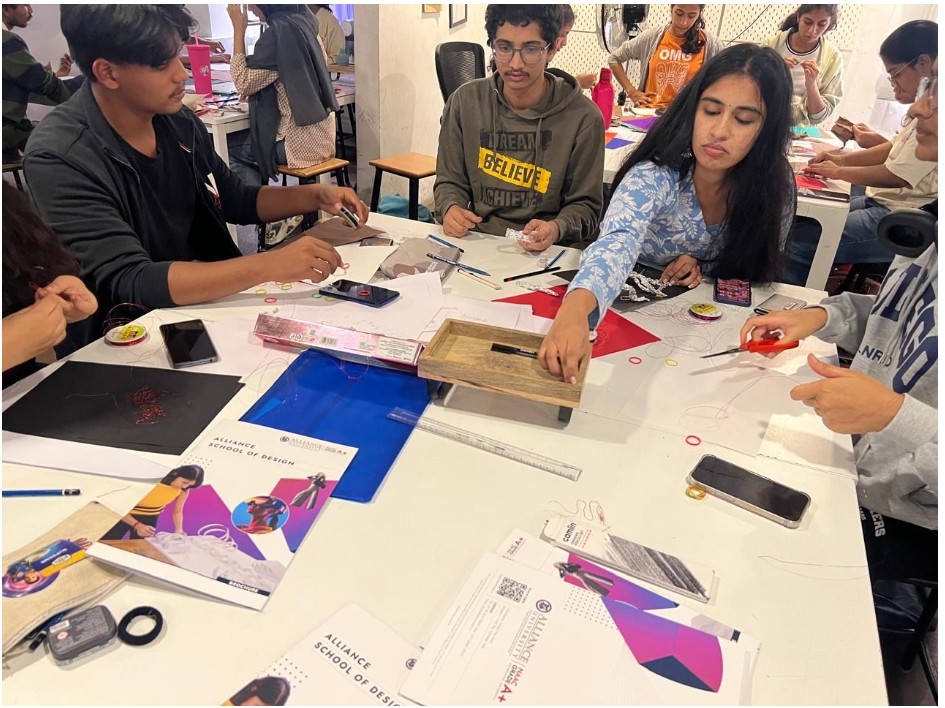
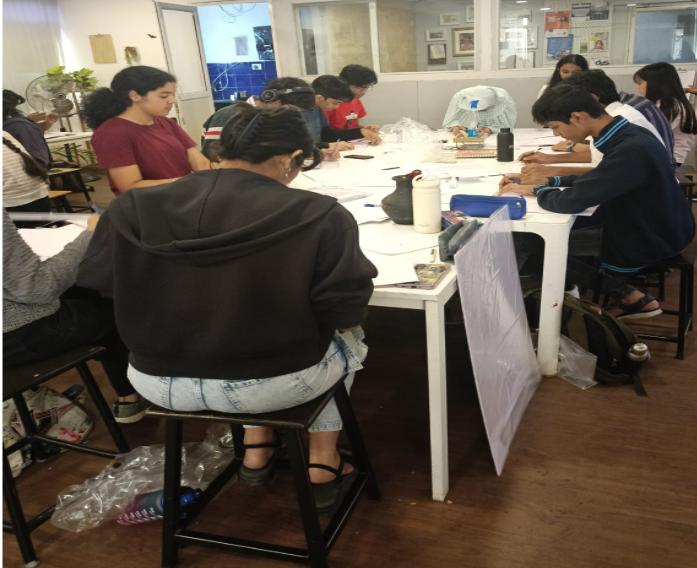
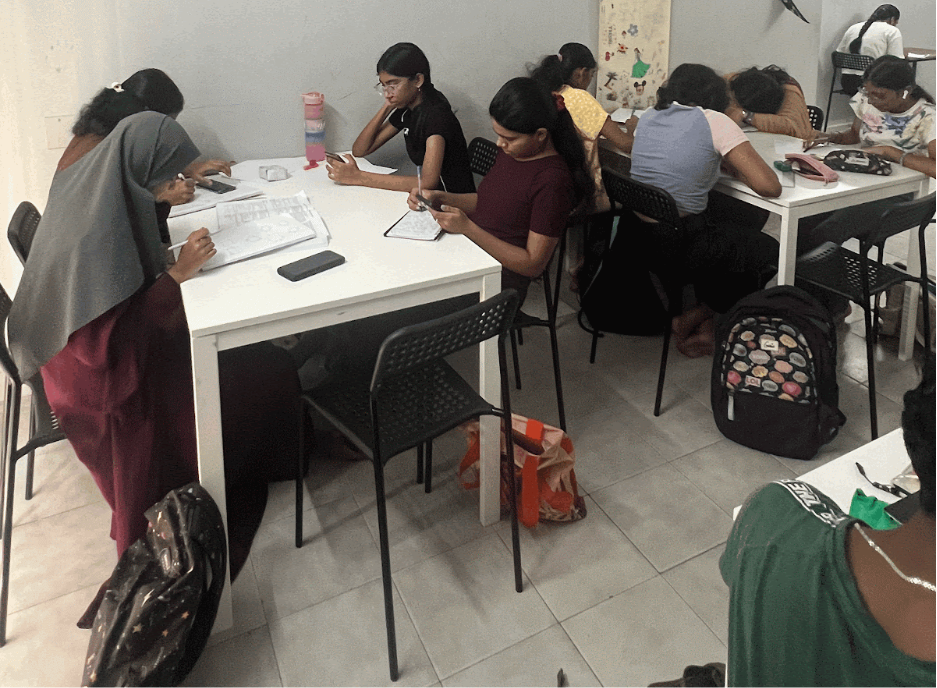
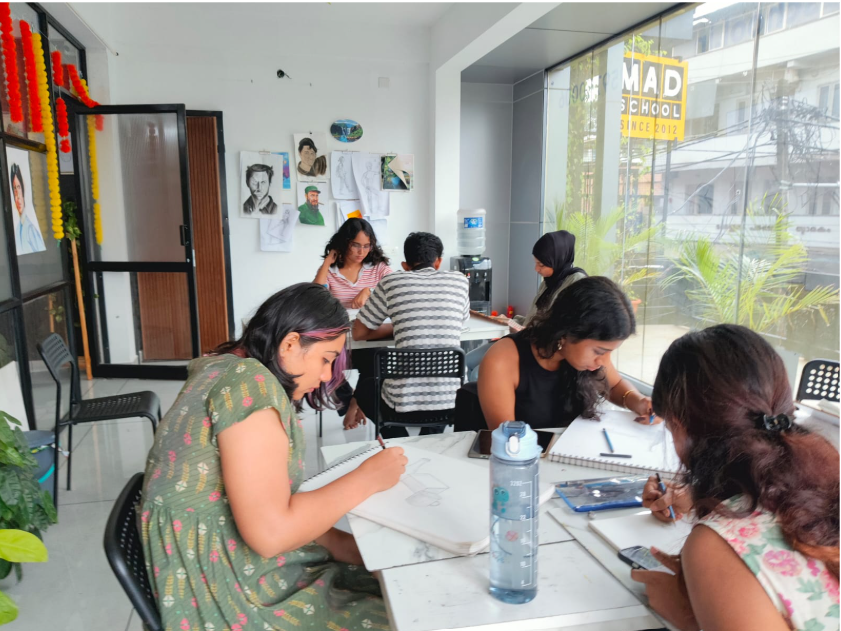
At MAD School, NID Studio Test preparation goes far beyond theory. Students train in real studio-like environments, work hands-on with materials, attempt timed mock studio tests, and receive personalised feedback from experienced faculty trained at NID, NIFT, and IITs. This practical, studio-based approach helps aspirants walk into the Studio Test with clarity, confidence, and creative control.
If you are preparing for the NID Studio Test 2026, the right guidance and structured practice can make the difference between just attempting the test and truly standing out.
| NID Studio test Coaching in Hyderabad | NID Studio test Coaching in Chennai |
| NID Studio test Coaching in Bangalore | NID Studio test Coaching in Kochi |
FAQ'S
Yes. The NID Studio Test is a mandatory stage for candidates who qualify the NID DAT Prelims. Your final selection largely depends on your Studio Test performance, along with the interview (where applicable).
No. You do not need to be an expert artist. NID evaluates clarity of ideas, visual communication, and thinking, not artistic perfection. Simple, confident sketches that clearly explain your idea score much better than detailed but confusing drawings.
The Studio Test is different, not necessarily harder. While NID prelims test aptitude and awareness, the Studio Test checks how you think and apply ideas in real time. Students who practice studio-based exercises usually perform better than those who rely only on theory.
You should practice with everyday, low-cost materials such as:
- Paper and cardboard
- Thermocol
- Clay or dough
- Straws, sticks, wire
- Fabric scraps
NID is not testing expensive materials, they are testing how smartly you use simple ones.
Extremely important. Many students lose marks not because of lack of ideas, but because they fail to finish on time. Regular mock studio tests with time limits help build speed, confidence, and decision-making ability.
Exact questions are not repeated, but patterns are consistent. Tasks related to sketching, model making, storytelling, and problem-solving appear every year. Practicing past-style questions helps you understand expectations and avoid surprises.
Quality matters more than quantity, but ideally you should show 4–6 varied ideas. NID prefers seeing different approaches, not the same idea repeated with minor changes.
Yes. Neat presentation reflects clarity of thought and professionalism. Clean sketches, organised layouts, stable models, and clear labeling can significantly improve how your answer is evaluated.
Self-preparation is possible, but many students struggle because they don’t get:
- Real studio exposure
- Feedback on their thinking
- Time-based mock practice
NID Mains coaching helps you identify mistakes early and correct them before the exam.
Ideally, start 6–8 months in advance. This gives enough time to:
- Build sketching speed
- Practice material handling
- Improve 3D and spatial thinking
- Attempt mock studio tests without panic
Late preparation often leads to rushed thinking and low confidence.
The biggest mistake is overthinking and under-planning. Students either spend too much time on one question or focus on decoration instead of concept clarity. NID rewards clear thinking over fancy execution.
At MAD School, preparation focuses on:
- Real studio simulations
- Hands-on material handling
- Time-based mock Studio Tests
- Individual feedback from experienced faculty
- Training students to think like designers, not just attempt questions
This approach helps students walk into the Studio Test with confidence and clarity.
Here’s a checklist of materials students usually find useful:
- Pencils (2B, 4B, 6B)
- Eraser, sharpener
- Black sketch pens, color pencils
- Cutter/scissors, fevicol, tape
- Chart paper, craft paper
- Clay or M-seal
- Straws, matchsticks, thermocol sheets
Also, make sure to check your admit card for allowed items - carry only permitted materials.